
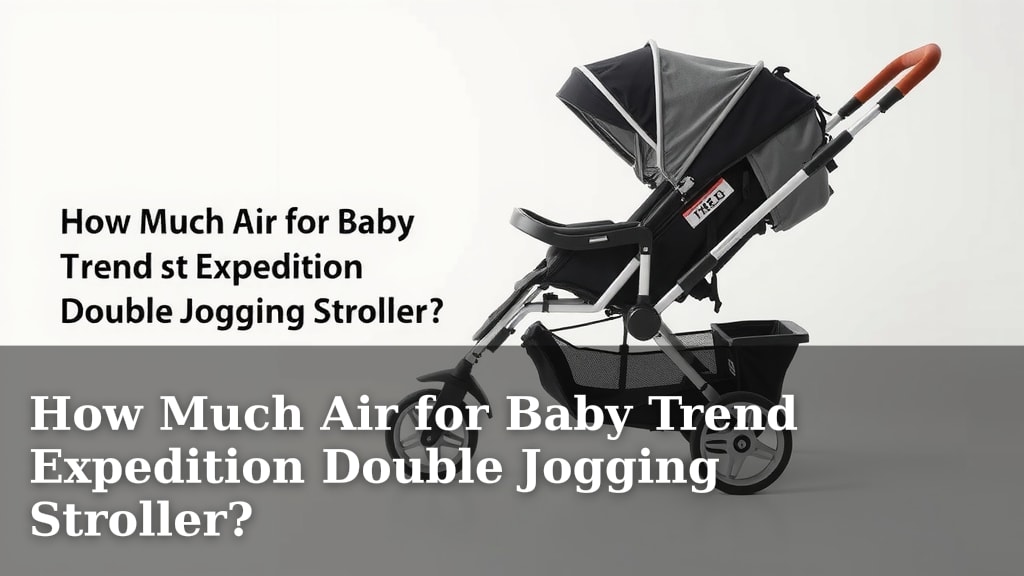
How Much Air for Baby Trend Expedition Double Jogging Stroller?
When prepping your Baby Trend Expedition Double Jogging Stroller, you’re likely wondering about the tire pressure. For optimal performance and safety, the recommended tire pressure is typically between 25-30 PSI. Always check the sidewall of each tire for the exact PSI range specified by the manufacturer.
Proper inflation is key for a smooth ride for your little ones and for protecting the stroller’s components. Underinflated tires can make pushing difficult. Overinflated tires can lead to a bumpier ride and potential tire damage. Finding that sweet spot ensures a comfortable and safe journey every time you head out.
- Tire pressure is crucial for stroller safety and comfort.
- Check the tire sidewall for specific PSI recommendations.
- Aim for the 25-30 PSI range if no specific number is found.
- Proper inflation makes pushing easier and prevents damage.
Let’s make sure your stroller is ready for your next adventure, whether it’s a run in the park or a stroll to the grocery store!
Getting the Tire Pressure Right for Your Baby Trend Expedition Double Jogger
You’ve got your Baby Trend Expedition Double Jogging Stroller ready to go, but what about those tires? Getting the tire pressure just right is more than just a suggestion; it’s key to a smooth, safe, and enjoyable ride for both you and your little ones. Think of it like a well-inflated balloon – it bounces back nicely and moves with ease.
What’s the Magic Number for PSI?
So, what’s the recommended air pressure? For most Baby Trend Expedition Double Jogging Strollers, you’re looking for a tire pressure between 25 and 30 PSI. This range is a great starting point. However, the absolute best place to find the exact number is on the sidewall of each tire itself. Manufacturers print the maximum and recommended PSI right there, usually in a small, easy-to-spot spot.
Why Tire Pressure Matters So Much
You might be thinking, “Does it really matter that much?” The answer is a resounding yes! Proper tire inflation affects several things:
Smoothness of the Ride
Imagine running with flat tires on your own shoes. Not fun, right? For your stroller, the right pressure means your little passengers get a gentle ride. Too little air, and every bump becomes a jarring experience. Too much air, and the ride can be overly stiff and bouncy.
Ease of Pushing and Steering
Properly inflated tires make pushing the stroller feel almost effortless. When tires are low on air, you’re fighting against them. This makes steering harder and can leave you feeling exhausted after just a short outing. Finding that sweet spot means the stroller glides, making your walk or run much more pleasant.
Stroller Longevity and Safety
Underinflated tires can put extra strain on the stroller’s frame and wheels, potentially leading to premature wear and tear. Overinflated tires are more prone to punctures from small objects or sudden impacts. Keeping tires at the recommended PSI helps protect your investment and ensures the stroller is safe to use.
Checking and Adjusting Your Stroller’s Tires
Now that you know why it’s important, let’s talk about how to actually check and adjust the air in your tires. It’s a simple process, but doing it correctly is important.
What You’ll Need
You really only need two things:
- A reliable tire pressure gauge. These are inexpensive and widely available at auto parts stores, sporting goods stores, or even online.
- A bicycle pump or air compressor with a Schrader valve adapter (which is the standard type of valve on your stroller tires).
Finding the Correct PSI on the Tire Sidewall
Take a close look at each tire. You’ll see a lot of tiny text molded into the rubber. Somewhere on there, usually near the rim or along the side, you’ll find numbers indicating the PSI. Look for something like “MAX PSI” and then a recommended range. For example, it might say “Inflate to 30 PSI.” If you see a range, like “25-30 PSI,” aim for somewhere in the middle, such as 28 PSI.
The Inflation Process
Once you know the target PSI:
- Remove the valve cap from the tire.
- Attach the pump securely to the valve stem.
- Start pumping. If your pump has a built-in gauge, great! If not, pump a bit, then remove the pump and use your separate tire pressure gauge to check.
- Continue pumping until you reach the desired PSI.
- Remove the pump and replace the valve cap.
- Repeat for all tires.
When to Check and Add Air
It’s a good habit to give your tires a quick check before each outing. Tires naturally lose a little air over time. If you notice they look a bit squishy or feel hard to push, it’s definitely time to add some air. Aim to do a more thorough check and adjustment at least once a month.
Troubleshooting Common Tire Issues
Sometimes, you might run into a little hiccup. Here are a few common things people encounter:
Uneven Tire Wear
If one tire looks more worn than the others, it could be a sign of improper inflation or alignment issues. Consistently keeping your tires at the correct PSI can help prevent this. If you notice significant uneven wear, it might be worth checking if the stroller’s alignment is off.
Tires Won’t Hold Air
This is usually a sign of a puncture or a leaky valve. Carefully inspect the tire tread for any sharp objects like thorns or glass. You might need to patch the tube or replace it. If the valve itself seems loose or damaged, that might be the culprit.
Difference Between Front and Rear Tires
Don’t be surprised if the front tire (often a single, larger wheel) has a slightly different recommended PSI than the rear tires. Always check the sidewall of each individual tire for its specific requirements. They are designed to function optimally at their own recommended pressures.
Understanding PSI: A Quick Analogy
Think of PSI (Pounds per Square Inch) as the “firmness” of your tire. If you imagine your tire is like a comfy cushion, PSI tells you how much air is inside to make it firm enough to support weight and roll smoothly, but not so firm that it’s rock hard and uncomfortable.
Quick Checklist for Stroller Tires
Ready to make sure your stroller is perfectly inflated?
- Locate the PSI marking on each tire sidewall.
- Grab your tire pressure gauge and pump.
- Check the current pressure of each tire.
- Add or release air to reach the recommended PSI.
- Ensure all valve caps are back on.
- Give the stroller a little push to feel the difference!
Conclusion
You’ve learned how vital proper tire pressure is for your Baby Trend Expedition Double Jogging Stroller. Getting it right means smoother rides for your little ones and easier pushing for you. Remember to always check the tire’s sidewall for the specific PSI range recommended by the manufacturer. If you can’t find it, the 25-30 PSI range is a safe bet. Now that you’re equipped with this knowledge, take a moment to check your tires. Your next outing will be so much more enjoyable with perfectly inflated tires!
Frequently Asked Questions
How do I know if my stroller tires are properly inflated?
You can tell if your tires are properly inflated by a visual check and a quick feel. They should look rounded and firm, not saggy or overly rigid. A simple push test will reveal if they offer good resistance without feeling rock hard or too soft.
Can I use a car tire pressure gauge on my stroller?
Yes, you can absolutely use a car tire pressure gauge. Stroller tires use the same Schrader valve as most car tires. Just make sure your gauge is accurate and can read the lower PSI range typical for strollers.
What happens if I overinflate my stroller tires?
Overinflating your stroller tires can lead to a very bumpy ride for your children. It also makes the tires more susceptible to damage from impacts or sharp objects. The stroller may also be harder to maneuver.
Do I need to check tire pressure before every single outing?
While not strictly mandatory, it’s a good practice to give your tires a quick visual check before each outing. A more thorough pressure check with a gauge should ideally be done at least once a month or if you notice the tires look low.
Is it okay if the front tire has a different PSI than the rear tires?
Yes, it’s completely normal for the front and rear tires to have different recommended PSI. Each tire is designed to function best at its own specific pressure, so always refer to the markings on each individual tire’s sidewall.


![10 Best Two Baby Stroller [2026]](https://bestbabystrollerjudge.com/wp-content/uploads/2026/08/10-best-two-baby-stroller-2026-featured-768x432.jpg)
![10 Baby Bargains Best Double Stroller [2026]](https://bestbabystrollerjudge.com/wp-content/uploads/2026/08/10-baby-bargains-best-double-stroller-2026-featured-768x432.jpg)