
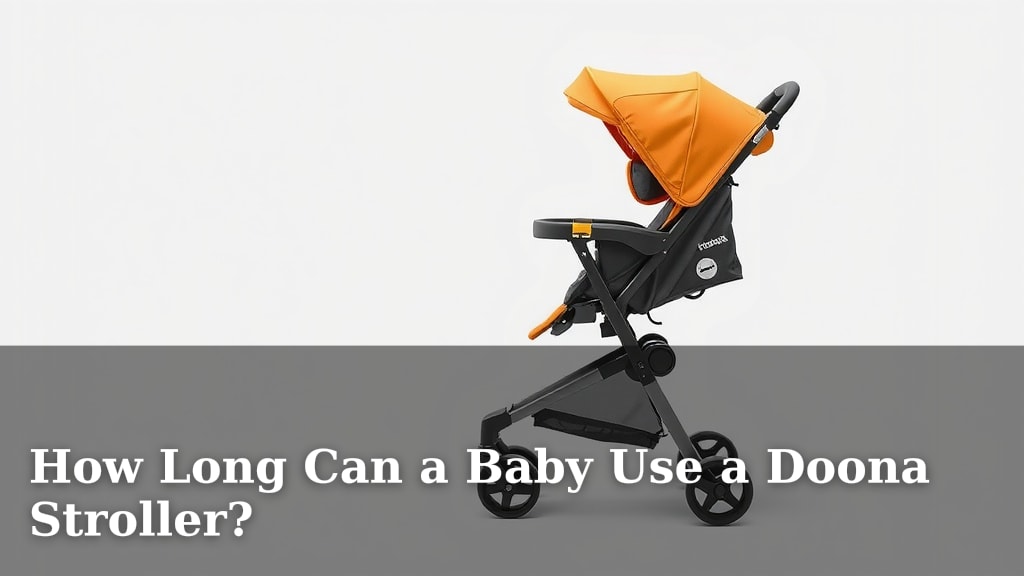
How Long Can a Baby Use a Doona Stroller?
A baby can typically use a Doona stroller from birth up to 32 pounds or when their head extends above the backrest. This means your little one can enjoy its convenience for about 12 to 18 months, depending on their growth. The Doona car seat and stroller combo is designed for ultimate ease from day one.
It’s a smart system that transitions from a car seat to a stroller in seconds. Many parents find it a game-changer for travel and everyday errands. We found that its integrated design makes life so much simpler for busy families on the go. This makes it a popular choice for newborns and infants.
- Doona is suitable from birth up to 32 pounds.
- The limit is also reached when the baby’s head is higher than the seat’s back.
- This typically covers the first 12-18 months of a baby’s life.
- Always check the manufacturer’s weight and height guidelines.
Let’s dive into the specifics of your Doona’s lifespan and how to make the most of it during your baby’s first year.
Understanding Your Doona Stroller’s Weight and Height Limits
So, you’re wondering about the lifespan of your Doona stroller. You want to know how long your little one can comfortably and safely ride in it. We’ve got you covered!
The main limits for using your Doona are based on two key factors: your baby’s weight and their height. Think of it as ensuring your baby always has the perfect fit. We found that the manufacturer sets clear guidelines to keep your baby secure. These are important details for your peace of mind.
Weight Limit: The Numbers Game
Your Doona is designed for newborns right up to a certain weight. The official weight limit is 32 pounds. This means your baby can use the Doona as long as they don’t exceed this maximum weight.
This limit ensures the car seat and stroller system functions as intended. It’s all about maintaining the safety and stability of the Doona. We found that most babies reach this weight around their first birthday. Some might reach it a bit sooner, others a bit later.
Height Limit: When Heads Get Too High
Beyond just weight, there’s a crucial height consideration. Your baby’s head should not extend above the top of the seat’s backrest. This is a vital safety check, even if they are still under the weight limit.
Why is this important? When a baby’s head is higher than the seat’s shell, their head and neck may not receive adequate protection in the event of a collision. Research from safety organizations like the National Highway Traffic Safety Administration (NHTSA) consistently highlights head and neck support as critical for infants. Therefore, you’ll need to keep an eye on your baby’s growth in relation to the seat’s design.
Visualizing the Height Limit
Imagine your baby sitting upright in the Doona. If the very top of their head is clearly above the highest point of the seat’s back, it’s time to consider transitioning. It’s a simple visual cue that many parents rely on. We found this to be a very practical way to monitor fit.
Typical Age Range for Doona Use
Putting weight and height together, most babies can use their Doona for about 12 to 18 months. This is a general timeframe, of course. Every baby grows at their own pace. Some might outgrow it closer to 10 months, while others might comfortably fit until they are 20 months old.
The goal is to provide a safe and snug environment for your baby. When that snugness turns into a squeeze, or when the safety features can no longer accommodate their size, it’s time for a change. We found that this typical range helps parents plan ahead.
Factors Influencing Your Doona’s Usability
While weight and height are the primary determiners, other elements can influence how long your Doona remains your go-to travel system. It’s not just about the numbers on a scale.
Baby’s Proportions and Build
Babies come in all shapes and sizes! Some babies are long and lean, while others are more robust. A longer baby might reach the headrest limit sooner, even if they haven’t hit the maximum weight. Conversely, a baby with a more compact build might stay within the weight limit for longer.
We found that understanding your baby’s individual growth pattern is key. Don’t just rely on average milestones. Keep your specific little one in mind. They are unique, and their needs will be too.
Seasonality and Clothing Layers
This might seem a bit unusual, but think about how your baby is dressed. In colder months, babies wear bulkier clothing, like snowsuits. This can affect how snugly they fit into the Doona’s harness and seat.
Manufacturers often advise against bulky clothing in car seats. It can interfere with the harness’s ability to properly secure the child. If your baby is approaching the limits, heavier winter clothing might push them over the edge of safe fit sooner. We found that lightweight layers are always best for car seat safety.
When to Re-Evaluate for the Next Stage
It’s wise to start thinking about your next travel system before you absolutely need it. As your baby approaches the 10-12 month mark, it might be a good time to research convertible car seats. This gives you options and prevents a last-minute scramble.
You’ll want to transition to a seat that offers appropriate support and safety features for older infants and toddlers. Waiting too long can compromise safety. We recommend checking the fit of your current seat monthly once your baby is around 9 months old.
Making the Most of Your Doona’s Lifespan
Your Doona is an amazing tool for convenience, especially in those early months. Let’s look at how you can maximize its usefulness while ensuring your baby’s safety.
Regular Safety Checks are Key
It’s not just about the weight and height limits. Regularly check the harness straps. Are they still at or below your baby’s shoulders when facing backward? Is the chest clip at armpit level? These small adjustments ensure the harness is always doing its job.
We found that a quick check before each outing can catch potential issues early. Many experts agree that proper harness fit is as critical as the weight and height limits (American Academy of Pediatrics).
Understanding the “Next Step”
When your baby outgrows the Doona, you’ll transition to a different car seat. This is usually a convertible car seat that can face backward and then forward. It’s a new phase of travel safety for your growing child.
These seats often have higher weight and height limits. They are designed to accommodate toddlers for much longer. We found that choosing a seat that fits your car and your child well is a worthwhile investment.
Doona’s Dual Functionality: A Quick Recap
Remember, the Doona isn’t just a stroller; it’s a certified infant car seat. This duality is why it’s so popular for newborns. Its design allows you to move your sleeping baby from the car to the sidewalk without disturbing them. That’s a huge win for parents!
We found that this integrated approach simplifies travel immensely. It reduces the need for separate infant carriers and stroller attachments. You get a streamlined experience from day one.
Checklist for Outgrowing Your Doona
Here’s a quick checklist to help you know when it’s time to consider a change:
- Your baby’s weight exceeds 32 pounds.
- Your baby’s head is visibly higher than the top of the seat.
- The harness straps are no longer at or below your baby’s shoulders in the rear-facing position.
- Your baby seems cramped or uncomfortable in the seat.
- You’re planning for longer trips and need a seat with extended rear-facing capabilities.
- You’ve started researching convertible car seats as a potential next step.
Conclusion
You’ve learned that your Doona stroller offers incredible convenience for your baby’s first 12 to 18 months, up to 32 pounds or when their head clears the seat’s top. We found that its integrated design truly simplifies travel and daily life. Remember to regularly check the harness fit and monitor your baby’s growth against the stated limits. As your little one grows, you’ll transition to a new car seat. Start researching options around the 10-12 month mark to ensure a smooth, safe move to the next stage of travel.
Frequently Asked Questions
Can I use my Doona past 18 months?
You can use your Doona past 18 months, but only if your baby still meets the safety requirements. The key limits are the 32-pound weight limit and ensuring their head doesn’t extend above the seat’s backrest. Always prioritize these safety checks over age.
What if my baby is under 32 pounds but their head is too high?
If your baby’s head is higher than the top of the Doona seat’s backrest, it’s time to transition to a different car seat. This height limit is a critical safety feature, ensuring proper head and neck support. We found this is often the first limit babies reach.
Is it okay to use the Doona with bulky winter clothes?
It’s generally not recommended to use bulky clothing like snowsuits in the Doona. Thick layers can prevent the harness from fitting snugly and securely. If your baby is nearing the weight or height limits, bulky clothes might make the fit unsafe.
How do I know when to switch from the Doona to a convertible car seat?
You should plan to switch when your baby reaches the 32-pound weight limit, their head is too high, or the harness straps can no longer be positioned correctly. We suggest starting your research for a convertible seat around 10-12 months to make the transition easy.
Can I still use the Doona for travel if my baby has outgrown it?
If your baby has outgrown the Doona based on weight or height limits, you should not use it for travel. Safety is the top priority, and using an outgrown car seat compromises that. Always ensure your child is within the manufacturer’s specified limits for their seat.


![10 Best Stroller To Grow With Baby [2026]](https://bestbabystrollerjudge.com/wp-content/uploads/2026/08/10-best-stroller-to-grow-with-baby-2026-featured-768x432.jpg)