
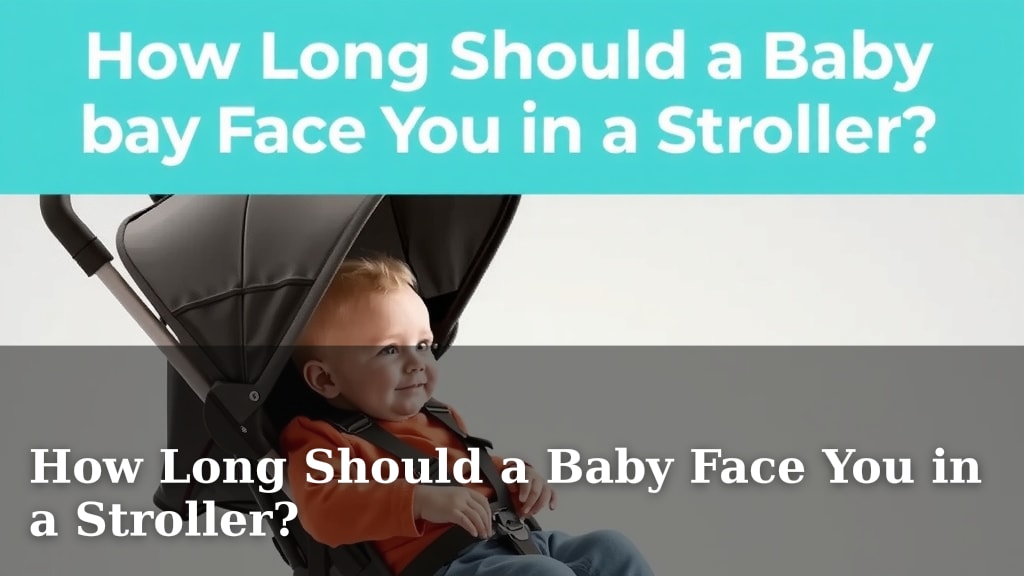
How Long Should a Baby Face You in a Stroller?
When deciding how your baby should face in their stroller, the general recommendation is that babies under 6 months should face you. This allows them to see a familiar and comforting face, which can be very reassuring. It also helps them feel more secure and less overwhelmed by the outside world. Many parents find this forward-facing position helps with bonding and monitoring your little one easily.
As your baby grows, you might wonder when to switch them to a forward-facing stroller seat. Most experts suggest this switch can happen around 6-12 months, once your baby can sit up unassisted and shows signs of curiosity about their surroundings. It’s about balancing their need for security with their growing desire to explore. This transition is a big step in their stroller journey!
TL;DR:
- Babies under 6 months should face you for comfort.
- Facing you helps them feel secure and lets you monitor them.
- Babies over 6 months can often transition to facing outwards.
- Look for signs of curiosity and good head control before switching.
- This allows them to see the world around them.
Ready to figure out the best stroller direction for your little explorer? Let’s walk through the key considerations and signs to watch for as you make this decision for your baby.
Your Baby’s View: Facing In or Out?
Deciding which way your baby should face in the stroller is a common question for new parents. It might seem like a small detail, but it can make a big difference in your baby’s comfort and your peace of mind. We’ve looked into what experts and parents generally recommend, and it usually comes down to your baby’s age and stage of development.
Generally, for the first few months, it’s often recommended that your baby faces you. This position offers a sense of security and closeness. As they grow, you’ll start to notice them becoming more aware of the world. That’s when you might consider the switch to a world-facing position.
The Benefits of Facing You: Early Months
When your baby is a newborn or very young, facing you in the stroller provides a lot of reassurance. Think about it from their perspective: they’re experiencing a whole new world. Seeing your face, a familiar and comforting presence, can help them feel safe and grounded.
Security and Comfort
This “parent-facing” mode is especially helpful during those first few months. Your baby is still adjusting to life outside the womb. The constant visual and emotional connection with you can help reduce their stress and anxiety. It’s like giving them a mini-safe haven on the go.
We found that many parents report their babies are calmer and nap better when facing them. This closeness can also be great for bonding. You can easily make eye contact, offer a smile, or gently touch their hand, all of which are important for your developing connection.
Monitoring Your Little One
Another key advantage of facing you is ease of monitoring. You can quickly check if they’re comfortable, if they’ve drooled through their bib, or if they need a diaper change. This is particularly useful during those unpredictable early days when you’re still learning all their cues.
It’s easier to soothe them too. If they fuss or cry, you’re right there to offer immediate comfort. This direct interaction can help them feel more secure and less overwhelmed by external stimuli like loud noises or busy environments (Cleveland Clinic).
When to Consider Facing Outward: Signs of Readiness
As your baby grows, their curiosity about the world around them will likely blossom. You’ll start to see changes in their behavior that suggest they’re ready for a new view. This transition is a natural part of their development.
Developing Head and Neck Control
A crucial milestone is when your baby has developed strong head and neck control. This usually happens around 4 to 6 months. They should be able to hold their head up steadily without support. This is important for safety and comfort when in the forward-facing position.
If your baby’s head still flops around, the forward-facing seat might not provide enough support. They need to be able to hold themselves up well to enjoy the view without strain. Many pediatric guidelines suggest waiting until this skill is well-established (CDC).
Showing Interest in Surroundings
You’ll likely notice your baby becoming more alert and engaged with what’s happening around them. They might start turning their head to look at things, point at objects, or show excitement when they see new sights and sounds. This curiosity is a great indicator they’re ready for the world-facing position.
When they’re facing outwards, they can take in all the new sights and sounds. This can be stimulating and enriching for their development. They can see people, animals, trees, and cars – a whole new learning experience!
Sitting Up Independently
Most experts recommend waiting until your baby can sit up unassisted before switching to a forward-facing seat. This usually occurs between 6 and 9 months. Being able to sit upright stably means they’re less likely to slump or become uncomfortable. It also allows them to better engage with the world they’re seeing.
A baby who can sit unsupported is more likely to enjoy the forward-facing position. They can look around, interact with their environment, and remain comfortable for longer periods. This independence in sitting is a key developmental marker.
The World-Facing Experience: Pros and Cons
Once your baby is ready, the forward-facing position opens up a new world of discovery. It can be incredibly stimulating for them.
Enriched Learning and Stimulation
Facing outward allows your baby to be an active observer of their surroundings. They can see everything happening in front of them, which can be a powerful learning tool. This constant stream of new visual input helps with cognitive development.
Think of them as little explorers, taking in the sights and sounds of the park, the grocery store, or a busy street. This stimulation can lead to more engaged and alert babies. It’s a fantastic way to introduce them to the world in a controlled way.
Potential Downsides to Consider
While exciting, the world-facing position can sometimes be overstimulating for some babies. If your baby tends to be sensitive, you might find they become fussy or overwhelmed more easily when facing outwards. They might have trouble settling down or sleeping.
Another point to consider is that it can be harder to monitor your baby’s reactions and needs when they’re facing away from you. You might not catch subtle cues of discomfort or fatigue as easily. This is why many parents opt for strollers with reversible seats.

Making the Switch: A Practical Checklist
Ready to decide? Here’s a quick checklist to help you determine if it’s time for your little one to face the world:
- Can your baby hold their head up steadily for extended periods?
- Does your baby sit up well without slumping or needing support?
- Does your baby show a strong interest in looking at things around them?
- Are they generally calm and content when awake in their stroller?
- Do you feel confident monitoring them from a slight distance?
- Is your stroller seat designed to provide good support in both directions?
Reversible Seats: The Best of Both Worlds
Many modern strollers come with reversible seats. This is a fantastic feature because it allows you to easily switch your baby’s direction as needed. You can start with them facing you for those early months and then turn them around when they’re ready for more exploration.
This flexibility is incredibly useful. On days when your baby seems a bit fussy or overwhelmed, you can simply turn the seat back to face you. When they’re feeling adventurous, they can face outwards. It truly offers the best of both worlds for you and your baby.
Having the option to change direction means you don’t have to commit to one position permanently. You can adapt based on your baby’s mood and the environment. This adaptability supports your baby’s needs as they grow and change.
| Baby’s Age | Facing You Recommended | Facing Out Possible |
|---|---|---|
| 0-4 Months | Yes – For security and bonding | No – Lack of head control |
| 4-6 Months | Yes – Still beneficial for comfort | Potentially – With good head control |
| 6-12 Months | Yes – If baby prefers or needs it | Yes – If baby is curious and can sit well |
This table provides a general guideline. Remember, every baby develops at their own pace. Always observe your child’s individual cues and needs. What works for one baby might be slightly different for another.
Conclusion
You’ve learned that your baby’s stroller position is more than just a convenience; it’s about their comfort and development. For those first few months, facing you offers crucial security and bonding. As your little one gains head control and curiosity, typically around 6-12 months, facing outward becomes a wonderful way for them to explore. Pay attention to your baby’s cues and consider a stroller with a reversible seat for maximum flexibility. Now, you’re well-equipped to make the best choice for your baby’s next adventure!
Frequently Asked Questions
Can my baby face outward if they can sit up but still get a little wobbly?
It’s best to wait until your baby can sit up steadily and independently before transitioning to a forward-facing position. Even a little wobbling can make the ride uncomfortable and less safe for them. Focus on them being fully supported while sitting before you make the switch.
How do I know if my baby is getting overstimulated by facing outward?
Look for signs like increased fussiness, crying, difficulty settling, or avoiding eye contact. If your baby seems more agitated or overwhelmed when facing outwards, it might be time to turn them back to face you for a while. They might need that sense of security again.
Is it okay to switch back and forth between facing me and facing outward?
Absolutely! This is where a stroller with a reversible seat truly shines. You can switch directions based on your baby’s mood, the environment, or what you’re doing. Some days they’ll want to see everything, and other days they’ll prefer your comforting presence.
My baby is 7 months old and has good head control, but still seems shy. Should I still turn them outward?
It’s always your decision based on your baby’s temperament. While 7 months is often a good age for outward-facing, if your baby seems shy or easily overwhelmed, there’s no harm in continuing to face them towards you. Prioritize their comfort and confidence.
What are the risks of having my baby face outward before they are ready?
The main risks involve discomfort and lack of support. If your baby’s head and neck aren’t strong enough, they could experience strain or fatigue. They might also feel less secure and become more unsettled, which can make outings stressful for both of you.
![10 Baby Gear Lab Best Jogging Stroller [2026]](https://bestbabystrollerjudge.com/wp-content/uploads/2026/09/10-baby-gear-lab-best-jogging-stroller-2026-featured-768x432.jpg)

![10 Best Double Baby Stroller For Twins [2026]](https://bestbabystrollerjudge.com/wp-content/uploads/2026/08/10-best-double-baby-stroller-for-twins-2026-featured-768x432.jpg)